

Also, known as “chimps,” chimpanzees are among the most fascinating creatures on Earth, sharing about 98.7% of their DNA with humans. Chimpanzees (Pan troglodytes) are one of two Great Apes endemic to the tropical forests and wooded savannahs of Central, East, and Western Africa.
Science studies have proved that chimpanzees are man’s closest relative to any other living mammal, accounting for 98.7% of our genetic code, meaning we share a common progenitor. Chimps, like humans, are characterized by long arms with opposable thumbs, short legs, and striking coats that range from brown to coarse black.
The adult and teenage chimpanzees have similar sizes, however, at standing height, a male chimp may reach up to 1.2 (4 ft.) and weigh 40 – 70 kgs kg (88 – 154 lbs.), whereas a female can reach 1.1 m (3.5 ft.) and weigh 27 – 50 kgs (60 – 110 lbs.).
Chimpanzees are very intelligent primates, known for their complex social structures (living in groups of 50 – 100 individuals), tool use, and emotional depth. The great apes belong to the genus Pan, which comprises two species: the Common Chimpanzee (Pan troglodytes) and the Bonobo (Pan paniscus). Both species are native to Africa and are known for their close genetic relationship to humans.
In this blog post, we provide an in-depth look at the types of chimpanzees and where travelers can visit them in their natural habitat. Understanding these species’ distinctions is essential for appreciating their roles in the ecosystem and the efforts needed for their conservation.
The Common Chimpanzee (Pan troglodytes)
The Common Chimpanzee, or simply “chimpanzee,” is the more widespread of the two species. These primates are highly adaptable, occupying a range of habitats in Africa from dense tropical forests to stunning savannahs. The Common Chimpanzee is further divided into four subspecies, each with unique traits and geographic ranges.
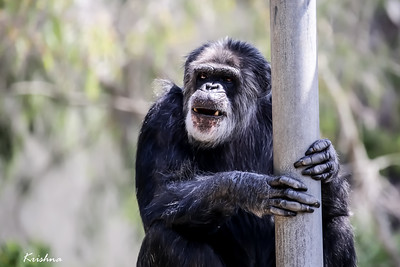
Western Chimpanzee (Pan troglodytes virus)
The Western Chimpanzee (Pan troglodytes verus) represents one of the most distinctive subspecies of chimpanzees. The apes are found in the tropical forests and savannahs of West Africa, particularly in countries like Guinea, Sierra Leone, Liberia, and Côte d’Ivoire.
These remarkable primates are known for their advanced hunting techniques, using wooden spears to catch prey like monkeys, and occasionally hunting mongooses and bushbucks. Unlike other chimpanzee species, Western chimpanzees showcase unique behaviors, including residing in cave homes, sharing food, playing in water, and even foraging during nighttime hours.
Unfortunately, these intelligent creatures are classified as endangered with an estimated population of about 21,300 to 55,600 individuals remaining in the world. This is due to rapid population declines caused by habitat destruction and hunting for bushmeat. However, urgent conservation efforts have been put in place to protect this unique subspecies and its vital role in the ecosystem.
The best places in Africa to explore the western chimpanzee include Taï National Park – a UNESCO World Heritage site in Cote d’Ivoire and Fouta Djallon, a highland region in Guinea known for its significant chimpanzee population and scenic landscapes.
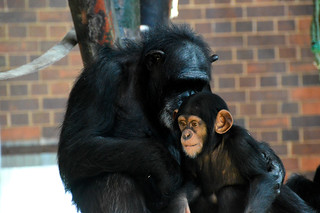
Nigeria-Cameroon Chimpanzee (Pan troglodytes ellioti)
This subspecies is primarily found in the forested regions along the Nigeria-Cameroon border and is one of the most endangered subspecies of the common chimpanzee. This subspecies is mainly due to its limited range and increasing threats from human activities, such as deforestation and poaching.
These chimps are known to occupy dense tropical forests, often in high-altitude regions, and are smaller in size compared to other subspecies, with darker fur. However, Male Nigeria-Cameroon chimpanzees can grow up to 70 kilograms, with body lengths reaching approximately 1.2 meters and heights of around 1.6 meters. Nigeria-Cameroon chimpanzees are known for their complex vocalizations and social interactions.
Top places in Africa to see these creatures in their natural habitat include Gashaka Gumti National Park in Nigeria and Korup National Park in Cameroon which boasts a significant population of Nigeria-Cameroon chimpanzees.
The Central Chimpanzee (Pan troglodytes troglodytes)
This is another subspecies of the common chimpanzee, primarily found across the dense tropical forests and savanna woodlands of Central Africa, particularly in the Democratic Republic of Congo (DRC), Cameroon, and Gabon.
However, significantly smaller populations also exist in regions like Equatorial Guinea, and the Central African Republic. These adaptable primates inhabit diverse environments with little human disturbance, from tropical moist forests to forest-savanna mosaics, at altitudes ranging from sea level to approximately 9,800 feet. Central chimpanzees are critically endangered creatures classified by the IUCN, with a total population of about 47,000 to 78,000 individuals.
Their numbers have been severely impacted by habitat destruction, poaching for bushmeat, and the devastating effects of the Ebola virus. However, the respective governments and concerned conservation bodies have established conservation efforts to protect this subspecies and ensure their continued survival in the wild.
Travelers interested in visiting these chimps can visit Odzala-Kokoua National Park in DRC, and Lope National Park in Gabon. These parks offer unforgettable guided treks to see the apes in their natural habitat.
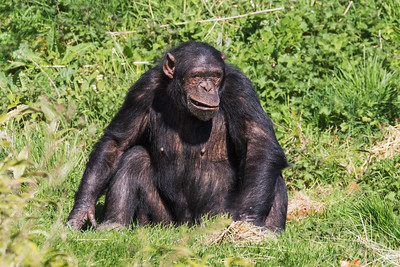
Eastern Chimpanzee (Pan troglodytes schweinfurthii)
The Eastern Chimpanzee is a widely distributed subspecies of the common chimpanzee found across several African countries, including Burundi, Rwanda, Tanzania, Uganda, South Sudan, the Democratic Republic of the Congo, and the Central African Republic.
This subspecies has garnered significant scientific attention, particularly through the pioneering work of Dr. Jane Goodall at Gombe National Park in Tanzania. Enlisted as endangered by the IUCN, Eastern chimpanzees face numerous threats, including habitat destruction and vulnerability to contagious human diseases, which have significantly impacted their populations.
Eastern chimpanzees are both terrestrial and arboreal, expert at navigating forest canopies and walking upright for short distances. They are omnivorous with a diet that includes a variety of plants and animals, showcasing their adaptability in diverse environments. However, despite their resourcefulness, Eastern chimpanzees are not immune to predation, with leopards and lions being their primary natural predators. Kibale Forest National Park in Uganda offers some of the best chimpanzee trekking experiences, with well-organized guided tours to explore these creatures in their natural habitat. Travelers on Tanzania safaris can also explore the eastern chimpanzees in Mahale Mountains National Park.
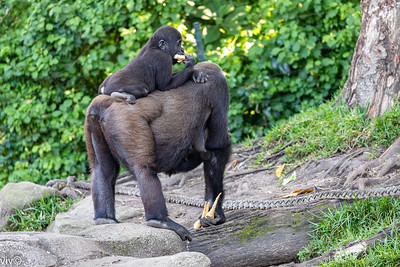
Bonobo (Pan paniscus)
The Bonobo (Pan paniscus), often called the “pygmy chimpanzee,” is a unique and distinct chimp species, easily distinguished from common chimpanzees by several physical and behavioral traits. Bonobos are native to a specific region within the Congo Basin in the Democratic Republic of Congo (DRC), occupying an area of about 500,000 square kilometers.
They thrive in primary and secondary forests, including seasonally inundated swamp forests, making these dense, remote habitats their home. Bonobos are characterized by their relatively long limbs, pink lips, darker facial skin, and a tail tuft that remains throughout adulthood. They also feature parted, longer hair on their heads, and some individuals display sparse, thin hair over parts of their bodies.
Dietarily, bonobos differ from common chimpanzees by leaning towards a predominantly frugivorous diet, primarily consuming fruits. Unlike their common chimpanzees, which often hunt small monkeys, duikers, and other antelope, bonobos exhibit less frequent hunting behaviors.
Bonobos remain a focal point for conservation efforts in DRC due to their unique place in the primate family and their vital role in the biodiversity of the Congo Basin. Those interested in exploring bonobos in their natural habitat can visit the Lomako-Yokokala Faunal Reserve and Salonga National Park in the Democratic Republic of Congo (DRC).

Conservation Status and Threats to Chimpanzees
Chimpanzees are some of the world’s critically endangered creatures and appear on the IUCN Red List. The primates face numerous threats, including habitat destruction, poaching, and diseases. However, several concerned organizations and African governments are working tirelessly to protect the chimpanzees through various initiatives, including, establishing national parks and reserves to provide safe habitats and involving local communities in conservation efforts to ensure sustainable practices. There have also been efforts to promote responsible tourism to generate revenue for conservation while providing education on the importance of protecting these primates.
Our popular Tanzania-Rwanda safari packages
10 Day Wildebeest and gorillas vacation safaris

Embark on a captivating journey through the heart of East Africa as we invite you to explore the enchanting landscapes, vibrant cultures, and rich biodiversity of Rwanda and Tanzania. This meticulously crafted 10-day itinerary promises an immersive experience, seamlessly blending the awe-inspiring encounters with gorillas
| TRIP DETAILS |
| REQUEST INFO |
6 Day Wildebeest and gorilla trekking safari
Book 6 Days Ngorongoro crater visit and Rwanda gorilla trekking to explore Tanzania & Rwanda on an Africa Safari experience tailored by Active African vacation the leading Safari operator in Uganda. The 6 Days Tanzania Rwanda Safari takes you to the great Ngorongoro crater reserve for an amazing wildlife experience.
| TRIP DETAILS |
| REQUEST INFO |
7 Day Rwanda-Tanzania vacation safari

Depending on the degree of lodging, the time of year, and the particular parks and activities included a 7-day safari in Rwanda and Tanzania might have somewhat different costs. Along with activities to do in every park, below is a sample schedule including expected expenses for middle-class, budget, and luxury alternatives.
| TRIP DETAILS |
| REQUEST INFO |