

Lake Katwe is a hypersaline lake located in southwestern Uganda in the Kasese district. This lake is found in Queen Elizabeth National Park on the floor of the Western Rift Valley spanning over 8 squares.
Surprisingly, this lake dries in the dry season due to its location in the rain-shadowed area southeast of the mountain Rwenzori ranges. Lake Katwe is famous for its high salt concentration with a rich legendary history as the main source of income for local communities in the surrounding areas.
The volcanic lake sits within the Katwe-Kikorongo volcanic field, which includes a group of crater lakes in the region. It’s connected to other lakes by underground channels thus the volcanic origins that give it similar chemical characteristics.
Lake Katwe, the Hypersaline
Lake Katwe is characterized by being hypersaline with a high concentration of salt and other minerals, making it an important site for salt mining the lake has various inlets but no outlets which makes the water saline.
Local communities around the lake have engaged in salt extraction for centuries. They employ traditional methods that involve evaporating water from the lake to obtain salt crystals. The extracted salt is used for various purposes, like food preservation, cooking, and trade.
Limited aquatic life at Lake Katwe
The salinity of the lake limits the presence of aquatic life, though different microorganisms and algae have been detected which has greatly contributed to its unique biodiversity.
The unique character of this place is not only limited to salt or wildlife in Queen Elizabeth National Park but also an opportunity to meet different tribes of Ugandans operating in the same area. The salt mining community is probably the richest representative of Uganda’s culture.
Katwe Salt Lake community and the neighborhoods’ is a place where one can meet over 55 tribes that belong to different ethnic groups. This makes this workplace the largest selection of all Ugandan tribes in one place, doing the same job. This representation gives proof of the importance of the lake as a source of livelihood.
The salt mining process in Lake Katwe
Salt mining in Lake Katwe is still being done the same way it has been done since the 14th century. Miners use hands and simple tools for all their work, the creation of salt pans is done and owned and run by different community members.
In the mining area, there is division of labor between men and women, where men extract the base rock salt while women work in the shallow salt pans to mine the table salt. Salt pans are depressions dug at the edges of the lake to collect table salt. The walls of the salt pans are built with wood and mud, to separate them from each other.
why salt is still mined in traditional way?
The existence and mining of salt in this lake is still beyond scientific systemization as the salt cannot be mined by modern machines. This is due to the presence of excessive sodium chloride that cannot allow the use of machines. This creates a great opportunity for the natives to remain the owners of the activity and a source of livelihood. Salt mining is always done by use of hands.
Salt mining always flourishes in the dry season. During this time, the high evaporation rate makes the saline water concentrate and salt is formed.
The dug depressions are called the salt pans. the salt formation processes are monitored and facilitated by the individual owners. Crusted salt forms on the surface of the water and is plashed out with water forcing it back into the lake through a small trench. The salt is then collected by women and washed with the lake water until it is clear without adding any other ingredients.
This salt is then filtered to make table salt. The men shovel salt blocks from the lake bottom to the shallow end. The mined salt is used for different purposes. The crystallized salt is for human consumption as table salt, Rock salt is sold to farmers as cow feed and for quick preparation of beans and meat in different households while the muddy salt is exported for fertilizer production, manufacture of soap, or for use in the textile industries for dying fabric.
Challenges faced by salt miners
Like in other activities, the salt miners face challenges as they carry out their activities like drying the dry season, the salt goes deep under the salt pans and the temperatures tend to drop.
Toxicity of the lake waters comes with different health problems in that men must put on condoms to protect their private parts, and women place flour in their private parts to prevent direct exposure.
Lake Katwe salt mining experience
Visiting Lake Katwe salt mines is another unique experience in Queen Elizabeth National Park. at the mines, a resident guide will take you through the history of the place and the mining activity. You will come to learn that most people rely on the lake for survival.
The lake has competition from other sources but has remained the main source of salt for Uganda for a very long period. At the lake shores, you will notice that members of the local community make crafts and stage them at the roadside. You can buy them as a way of supporting the community and helping them to supplement their mining activity.
How to reach the Lake Katwe Mining area.
This lake can be accessed by both private and public means. The lake can be reached after a 22-kilometer drive after turning off the Mbarara-Kasese road between Kikorongo and Kasese towns. The same road leads to Mweya gate.
From the gate, continue and drive straight 1-2km until you reach the KATIC office. For those interested in exploring the park and the community, you will travel from Kikorongo with local guides through the village, to the salt lake, and finally to the park on Katwe road. This road passes through the park but guests do not pay entrance fees to the park because it’s publicly owned.
The best time to visit the salt mine
A tour of the mining area lasts for at least two hours during the daytime that is from 7:00 am to 7:00 pm. If your travel schedule is so tight, it is always better to book earlier so that the scheduled activities at the park are not missed, say chimpanzee tracking and boat cruises.
Pricing for visits to the mining area.
Currently, a visit to the salt mine is $10 per person and $30 for a school group per bus. Payments are always made in advance to the community office (KATIC) in charge or through a tour agent who will help with the booking. If you opt to have your safari on a boda-boda, the booking fee is $16 per person starting from Kikorongo town. Independent travelers do not need to pay for parking or park entrance.
Other services and activities that come along with the tour to the Lake Katwe salt mining area.
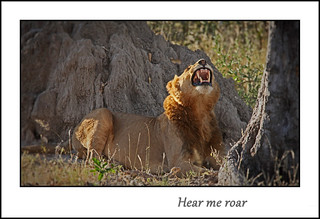
Roaring lion at Okavango Delta – African safari
In Katwe town, you will find restaurants that prepare delicious local meals and fresh fruit juice and handicraft shops. If you have a little additional fee, you can engage in village tours, to local residences, fishing villages, or birding tours on Lake Edward.
In addition to this, you can visit lake Munyanyange to watch the lesser flamingo birds that usually visit the lake in August to November traveling from Kenya.
Along this tour, you will luckily spot wild animals like antelopes, elephants, warthogs, and several bird species. you will enjoy some wild animals in other salty craters like Nyamunuka.
At the end of a two or three-hour tour to the salt mines, you will have felt a true expedition of true cultural industry that has existed for centuries.
The popular safari adventure to do in Uganda and Rwanda
[/vc_column_text][/vc_column][/vc_row]
10 Day wildebeest and gorilla trekking safari
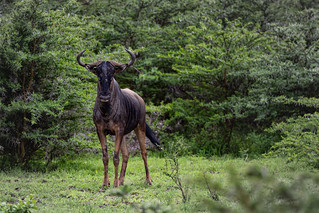
Embark on a captivating journey through the heart of East Africa as we invite you to explore the enchanting landscapes, vibrant cultures, and rich biodiversity of Rwanda and Tanzania. This meticulously crafted 10-day itinerary promises an immersive experience, seamlessly blending the awe-inspiring encounters with Rwanda’s majestic gorillas and golden monkeys
| TRIP DETAILS |
| REQUEST INFO |
10 Days Kilimanjaro and gorilla trekking safari
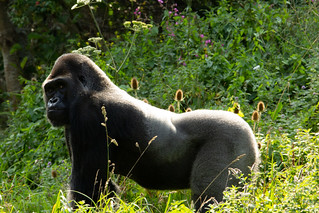
This 10 days Kilimanjaro & Gorilla safari brings you to the highest peak of the tallest mountain in Africa standing at 5895m above sea level. Mountain Kilimanjaro is the longest single-standing mountain in the world. Although there are 6 routes for hiking the mountain Kilimanjaro, which are; the Shira (Londorossi) route, Lemosho route, Machame route, Umbwe route, Maranggu route, and Rongai route.
| TRIP DETAILS |
| REQUEST INFO |
14 Day best of Rwanda and Tanzania vacation safari
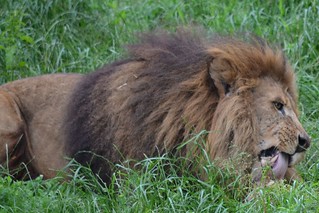
Embark on an extraordinary 14-day journey through the heart of East Africa, where the tapestry of nature unfolds in its most magnificent and untamed form. This meticulously crafted itinerary invites you to traverse three captivating countries – Rwanda, Kenya, and Tanzania – each offering a unique blend of culture, wildlife, and breathtaking landscapes.
| TRIP DETAILS |
| REQUEST INFO |