

The lion, leopard, elephant, buffalo, and rhinoceros are referred to as the Africa’s big five. They are among the major tourist attraction across Africa. Tanzania, an East African country, boasts a huge number of these animals. This makes it a perfect destination for wildlife enthusiasts and Tanzania safari adventurers.
Nestled within Tanzania’s diverse landscapes, from the evergreen savannas of the Serengeti to the forests of the Ngorongoro Conservation Area, these wildlife moves freely to offer the adventurers moments to remember. Here is a detailed explanation of each of the Africa’s big five and where it can be found on your Tanzania safari.
African Lion on Tanzania safari
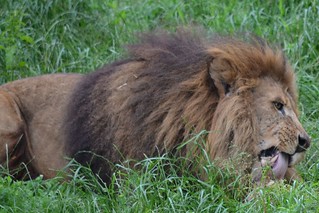
lion – Tanzania safari
The African lion; Not the biggest but still known as the ‘king of the jungle’ due to its resilience power and determination. The special creatures find home in Tanzania. Most in the renowned National parks like Serengeti and renowned conservation areas like Ngorongoro. Here, visitors can witness the visitors can witness the pride the renowned ‘king of the jungle’ moves and the power he uses to get his meat.
Another perfect sport for the African lion is Ngorongoro Crater, a UNESCO World Heritage. The enclosed ecosystem that characterizes the reserve makes it a perfect place for wildlife including Lions. On your Tanzania safari, encountering lion with a once in lifetime experience. It doesn’t matter whether you find it resting with the pride in the shades of savanna trees in the park. Or meeting a raw lioness hunting her prey, the experience you will get will last for the eternity.
African Elephant
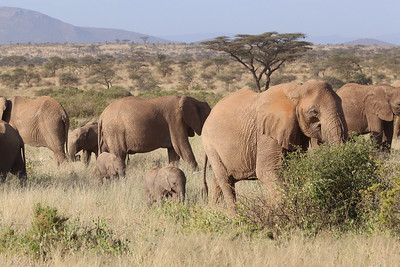
Elephant – Tanzania safari
With Tanzania boosting some of the biggest population of the remaining African Elephant. When considering the entire continent, the country is the prime place for the wildlife lovers. Tarangire National Park, located in northern Tanzania is one of the famous parks where you will meet Elephant on your Tanzania safari. The park is home to huge number/ big population of Elephant that gather around River Tarangire for water during dry season. This provides a beautiful scenery for photographers and film makers.
You can also find elephant at the Selous Game Reserve One of the largest protected areas in Africa. With diverse habitats, like woodlands, grasslands, and wetlands. Selous give a favorable condition for the elephant to thrive through it. Whether you are meeting them at waterhole, playing with their young one or moving/ grazing in savanna grassland, meeting these African giants will leave with everlasting impression.
African Buffalo on Tanzania safari
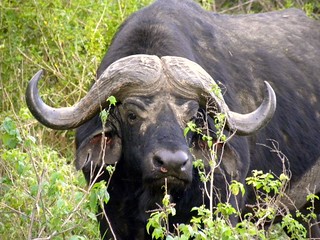
Buffalo on Tanzania safari
The African buffalo, also known as the Cape buffalo, is a formidable and iconic species. They roam the savannas and woodlands of Tanzania. Renowned for their strength, resilience, and gregarious nature, African buffaloes are an integral part of Tanzania’s rich wildlife heritage.
One of the premier destinations to encounter African buffaloes on Tanzania safari is the Serengeti National Park. Here, these massive bovines can be found grazing on the open plains alongside other iconic species such as lions, elephants, and giraffes. Their imposing presence and distinctive horns make them a sight to behold for visitors exploring the vast expanses of the Serengeti.
The Ngorongoro Conservation Area, with its diverse ecosystems and abundant wildlife, is another hotspot for African buffalo sightings in Tanzania. Within the crater walls, buffalo herds can often be spotted grazing on the lush grasslands. Or seeking refuge from the heat near water sources. Encountering a herd of African buffaloes in Tanzania is a thrilling experience that offers insight into the intricate dynamics of life on the savanna. Whether observing them as they graze peacefully or witnessing the intense camaraderie within the herd. The presence of these magnificent creatures adds a sense of awe and wonder to any safari adventure in Tanzania.
African Leopard
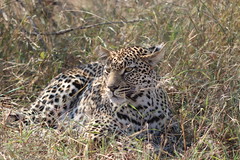
Leopard – Tanzania safari
The African leopard (Panthera pardus pardus) is a master of stealth and one of the most elusive big cats to encounter in the wild. In Tanzania, this majestic predator can be found prowling through the dense forests, rocky outcrops, and savanna grasslands of various national parks and reserves.
Tanzania’s vast and diverse landscapes offer prime habitats for leopards, making it an ideal destination for wildlife enthusiasts hoping to catch a glimpse of these elusive cats. National parks such as the Serengeti, Tarangire, and Ruaha, as well as conservation areas like the Ngorongoro Crater, are known for their healthy leopard populations.
Unlike lions, which are often found in large social groups, leopards are solitary and highly adaptable hunters. They are skilled climbers and often haul their kills, such as antelopes or small mammals, into the safety of trees to avoid scavengers and other predators.
Encountering a leopard in the wild is a rare and thrilling experience, as their elusive nature and nocturnal habits make sightings relatively uncommon. However, patient and observant visitors may be rewarded with sightings of these magnificent cats. Lounging in the branches of acacia trees or stealthily stalking their prey through the bush.
For visitors to Tanzania, the opportunity to encounter a leopard in its natural habitat is a truly unforgettable experience. It offers a glimpse into the mysterious world of Africa’s most enigmatic big cat. Whether glimpsed in the golden light of dawn or the velvet darkness of night, the sight of a leopard in the wild is sure to leave a lasting impression on all who have the privilege to witness it.
Rhinoceros (Black and White) on African safari
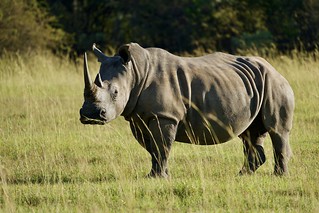
Rhinos at Serengeti in Tanzania safari
Tanzania is home to both the black rhinoceros and the white rhinoceros. Although. their populations have faced significant challenges due to poaching and habitat loss. While the black rhino is critically endangered and much rarer, the white rhino population has seen some recovery. Efforts, albeit with ongoing conservation concerns.
Efforts to protect and conserve rhinoceros’ populations in Tanzania have been ongoing. With a focus on anti-poaching measures, habitat restoration, and community involvement. Protected areas such as Serengeti National Park, Ngorongoro Conservation Area, and Selous Game Reserve have been key to these conservation efforts. They provide secure habitats where rhinos can thrive.
from recent years, thereis some encouraging signs of rhinoceros recovery in Tanzania, particularly for the white rhino. However, the black rhino remains critically endangered, with only a few scattered populations remaining in the country.
For visitors to Tanzania, the opportunity to see rhinoceros in the wild is exceedingly rare. This is due to their low numbers and the need for extensive protection to ensure their safety. However, guided safaris and conservation-focused tours may offer glimpses of these magnificent creatures in their natural habitats. Providing valuable insights into the ongoing efforts to protect and preserve them for future generations.
conclusion
In conclusion, Tanzania safari offers biodiversity and a sanctuary for the Big Five – the lion, leopard, elephant, buffalo, and rhinoceros. Each of these iconic species represents a unique facet of the African wilderness, captivating visitors with their beauty, power, and resilience. For visitors to Tanzania, encountering the Big Five is more than just a wildlife experience it’s a journey into the heart of Africa’s natural wonders, a testament to the beauty and resilience of the natural world, and a reminder of our collective responsibility to protect and preserve these magnificent creatures and the ecosystems they call home.