

WHERE TO SEE THE BIG CATS IN KENYA?
Visit Kenya one of the premier leading wildlife destinations in the world for witnessing big cats in their natural environment. The country is a home to more than 2000 lions living in different safari destinations making it the third largest population on the African continent.
Kenya is more than just a place to see wildlife but a living epic, with lions ruling under acacia canopies, cheetahs sprinting across wide-open plains, and leopards blanketing themselves in variegated shadows.
Despite Kenya housing a large concentration of the big cats, Kenya still serves as a home to vast wildlife such as wildebeests, zebras, antelopes, hares, and the bird species while on a safari.
In this article we will show you where the feline legends of Africa still reign if you’re drawn to the wild and the opportunity to witness these magnificent big cats in their native habitats while in Kenya.
WHAT ARE THE BIG CATS?
THE CHEETAHS
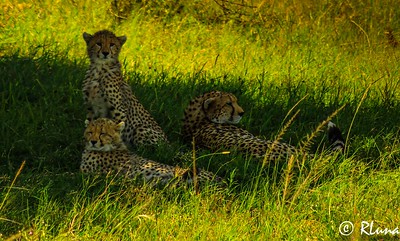
Acinonyx Jubatus, commonly referred to as cheetahs, are the world’s fastest land animals on earth. Of all the big cats in Kenya, the cheetah is perhaps the most captivating creature while on a Kenyan safari. Despite their uniqueness, they are difficult to see while on a Kenyan safari.
Despite their similarities, the first things that set cheetahs apart from leopards it’s their size, which makes them solitary, and their tear traces that run from the corners of their eyes to the side of their nose and mouth, which allows easy identification.
In the kingdom of the cheetahs the females always take care for the young ones as thy teach them various survival skills. The female cheetahs raise them alone, leaving the cubs to take care of themselves after 18 months. As already stated, cheetahs are solitary animals, with females interacting with males exclusively for the purpose of reproduction. While female cheetahs depart the group at around age two, males remain in the group for the rest of their lives.
Gazelles, porcupines, wildebeests, impalas, zebras, and hares are among the wildlife species that cheetahs feed on.

AFRICAN LIONS
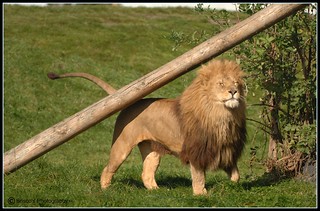
African lions are one of Kenya’s most iconic wildlife and a must see while on a safari in Kenya. These predators can be traced in many National Parks and Reserves in Kenya, such as Amboseli National Park, Lake Nakuru National Park, Masai Mara National Reserve, Nairobi National Park, and Samburu National Reserve. They prefer dense shrubs, open woodlands, and grasses and tend to avoid the rainforests.
Unlike domestic cats, lions have circular eyes instead of vertical ones, which usually makes it easier for them to locate and pursue their prey. Lions have excellent vision because of their wide eyes, which let in lighter and make nighttime hunting easier. If there is an abundance of food, lions, particularly males, will consume 15% of their body weight, which is known as putting them in a food coma.
This is an important fact about lions. They share a pride of 25 lions, which includes cubs, one to 4 males, semi-adults, and several females with a dominant. These lions consume anything they can hunt, such as buffaloes, gemsbok, wildebeests, and zebras.
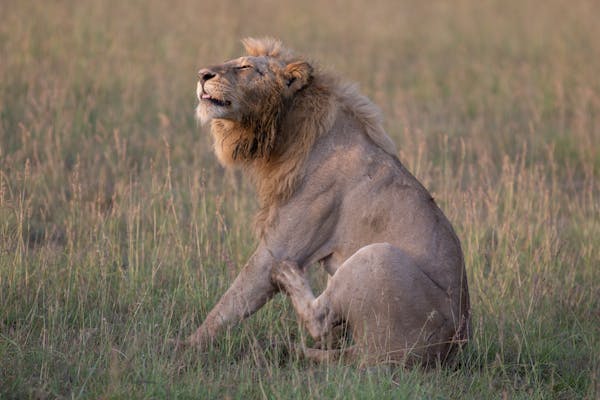
African Lion at Sambula National Park
LEOPARDS
Of all the large cats found in Kenya, leopards are the most enigmatic and best creatures to encounter with while on an African safari. They are expert climbers and camouflage experts who move with ethereal grace through savannahs and woodlands.
In addition to being excellent hunters, leopards can carry prey half their size up trees, where they typically rest after a hunt. With a top speed of 58 kilometers, they are swift creatures. Male leopards are stockier, weigh around 60 kg, and are heavier than females. They also have larger paws and heads.
Located in various dense shrubs, the lairs of female leopards shield their young from any potential attackers. To improve the cubs’ protection, the lairs are shifted every day.
The most ideal for viewing leopards in Kenya include Hell’s Gate National Park, Tsavo East and Tsavo West National Park, and Samburu National Reserve, among others.
WHERE TO SPOT THE BIG CATS IN KENYA?
MASAI MARA NATIONAL RESERVE
Masai mara is a renowned safari destination due to its large concentration of the big cats (lion, leopard, and cheetah) with approximately 900 lions living in the reserve and the private conservancies.
Situated at the Kenya-Tanzania border, a trip to the Reserve ensures viewing a lot of the big cats while on a game drive with a knowledgeable guide. A guided safari in Masai mara gives you vast opportunities to see the Naboisho and Seketa pride. The reserve is also home to the Musiara pride which has been highlighted and featured in several movies.
One of the top four cheetah safari destinations in East Africa is Masai Mara, where a sizable population of cheetahs may also be seen in the southern portion of the Reserve. Although they are more difficult to see, you may still be fortunate enough to see the leopards as they emerge from the trees to hunt in the Masai Mara Reserve. Leopards often reside deep within the riverine woodlands.
Leopard at Masai Mara – African safari
Best time to visit: June to October during the dry season.
Best for: All three big cats – lions, leopards, and cheetahs
AMBOSELI NATIONAL PARK
Visit one of Kenya’s most cherished protected areas, (Amboseli np) renowned for its stunning landscapes, rich biodiversity, and unparalleled views of Mount Kilimanjaro, Africa’s highest peak.
Despite being small in comparison to other national parks, Amboseli is home to the biggest population of elephants in Kenya and is one of the most popular tourist sites in the country. Approximately 200 lions, among the largest in the nation, can be seen throughout the year in Amboseli National Park.
Amboseli used to have the greatest number of lions in Kenya, but due to ongoing conflicts with the residents over grazing land, poaching grew there, killing many of the animals and drastically lowering their numbers to the 200 that now reside in various prides. Although the Selankay Conservancy and Amboseli National Park share a sizable cheetah population, leopards are difficult to locate in this area.
TSAVO WEST AND EAST NATIONAL PARKS
With more than 23,000 kilometers and a constant stream of cats all year round, Tsavo West and East is the largest park in Kenya. With more than 675 lions, Tsavo is home to the second-largest pride. Most people connect Tsavo lions with the man-eaters who terrorized and attacked railroad workers during the 1900 Uganda Railway construction project, which resulted in the deaths of roughly 35 people.
The Tsavo male lions are like the males in South Africa in that they lack manes, which sets them apart from the others. However, Tsavo is not the greatest place to go if you want to see leopards and cheetahs because they are rare and prefer to live deep in the forest, making it difficult to notice them.
Best for: Great scenery, solitude, and ancient lion mythology
SAMBURU NATIONAL RESRVE
Situated in the northern & arid regions of Kenya, lies one of the Kenya’s top iconic national reserves which is Samburu. Covering over 535 square kilometres, the reserve is a popular home for the one of the largest leopard populations in the country.
Though lions are uncommon to see, the park is home to approximately 50 lions. You may also see one or two of them in one of the three areas within the Kalama Conservancy. The Ewaso Ngiro River makes it simple to track down these large cats. The ideal environment for habitation and hunting their prey is also provided by the grasses and shrubs around the river.
Best for: Observations of leopards and unusual northern species
Ol PEJETA (Laikipia conservancies)
Spanning about 9,500 square kilometers, OI Pejeta is one of Kenya’s most important wildlife regions outside the government-protected areas.
Often referred to as Laikipia Conservancies, Ol Pejeta is most famous for housing a sizable population of both black and white rhinos, who were primarily poached to extinction in Kenya’s many national parks.
Ol Pejeta is home to 20 leopards, and 30 cheetahs and has about 6 to 7 lion prides which have a maximum of 90 animals each. The prides in the conservancy are easy to track because some lions have radio collars.
One of the brides among all the prides in Ol Pejeta is the brotherhood pride, which is located in the eastern part of the conservancy comprising of 24 members. The best time to see the big three cats in Ol Pejeta is during the dry season, when many of them are out hunting and cooling off from the heat.
MERU NATIONAL PARK
For those desiring for a more exclusive and uncrowded big cat encounter, Meru National Park is an emerging star and one of Kenya’s best-kept safari secrets. It’s from here that lioness Elsa, that featured in “Born Free was filmed from.
The park today has an increasing number of big cats unlike in the past 1970s where it had less numbers of the population of the big cats due to excessive poaching acts.
However, in the 2000s, lions were successfully re introduced into Meru national park thanks to the massive conservation efforts to the government of Kenya.
Today the park is home to more than 80 lions. Leopards are abundant at the border, where riverine woods can be found along the Tana River and its a perfect place for viewing the big cats in Kenya.
WHEN IS THE BEST TIME TO VIEW THE BIG CATS IN KENYA?
Please note that the big cats can be viewed at any time of the year there is the best times to see them and it’s generally the dry season (June to October and December to February).
This is because during the dry season, the grass is thin making it easier to identify big cats. Because of the heat, many of them may be seen looking for water at the shores of the water bodies thus easy spotting of the big cats.
Furthermore, some tourists can decide to visit during the wet season that runs from May to March. The wet season is very ideal for people who hate large crowds and the budget travellers since some lodgings tend to reduce on their prices.
Popular Safaris to do on African safari
1 day Mabamba shoebill vacation-Uganda birding safari
14 Days Uganda, Rwanda & Tanzania’s wildlife and primates
6 day Uganda Family adventure: chimps & wildlife
10 days Magical Uganda and Kenya: wildebeest &gorillas
100% 1-day Rwanda and Uganda Gorilla trekking itineraries
6 days Serengeti migration and Rwanda gorilla tour
3-day Rwanda gorilla from Serengeti: All inclusive safari
Extra ordinary 5-day Serengeti migration &Rwanda gorillas
6-day wildlife experience in Rwanda: gorillas & big 5
5 Day Photogenic gorilla trekking in Rwanda & Rwanda
6-Day chimpanzee, gorillas & canopy walk in Rwanda
6 Days Chimpanzees and gorillas: Uganda primate safari
10-Day Iconic Kenya Wildlife and Beach Safari
More packages for you on African safari
10 Day Kilimanjaro & gorillas
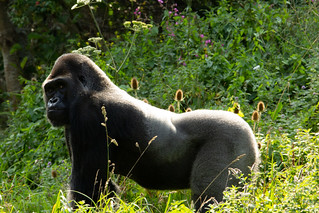
This 10 days Kilimanjaro & Gorilla safari brings you to the highest peak of the tallest mountain in Africa standing at 5895m above sea level. Mountain Kilimanjaro is the longest single-standing mountain in the world. Although there are 6 routes for hiking the mountain Kilimanjaro, which are; the Shira (Londorossi) route, Lemosho route, Machame route, Umbwe route, Maranggu route, and Rongai route.
| TRIP DETAILS |
| REQUEST INFO |
10 Days wildebeest & gorillas safari
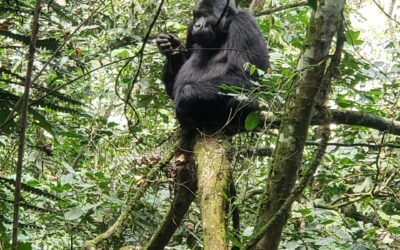
Embark on a captivating journey through the heart of East Africa as we invite you to explore the enchanting landscapes, vibrant cultures, and rich biodiversity of Rwanda and Tanzania. This meticulously crafted 10-day itinerary promises an immersive experience, seamlessly blending the awe-inspiring encounters with Rwanda’s majestic gorillas and golden monkeys with the boundless wonders of Tanzania’s iconic Serengeti
| TRIP DETAILS |
| REQUEST INFO |
15 Day primate, wildlife & beach life
Welcome to an exhilarating itinerary that seamlessly weaves together the wild landscapes of Uganda and the exotic charm of Zanzibar. Over the course of 15 days, you will embark on an unforgettable journey that promises not only encounters with remarkable wildlife but also immersive cultural experiences and moments of sheer relaxation.
| TRIP DETAILS |
| REQUEST INFO |
5 Day best of Rwanda primate safaris
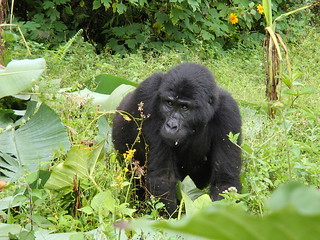
This 5 Days Best of Rwanda Primate Safari will bring you to the awe-inspiring primate destinations in this land of a thousand hills. It will take you to Volcanoes National Park in the Virunga ranges where you will encounter both the magnificent, huge, gentle, and endangered mountain gorillas and the beautiful golden monkeys that are endemic to the Virunga ranges.
| TRIP DETAILS |
| REQUEST INFO |
15 Day Uganda Rwanda Primate & wildlife
Welcome to an exhilarating itinerary that seamlessly weaves together the wild landscapes of Uganda and the exotic charm of Zanzibar. Over the course of 15 days, you will embark on an unforgettable journey that promises not only encounters with remarkable wildlife but also immersive cultural experiences and moments of sheer relaxation.
| TRIP DETAILS |
| REQUEST INFO |
6 Day Ngorongoro crater & gorillas
Book 6 Days Ngorongoro crater visit and Rwanda gorilla trekking to explore Tanzania & Rwanda on an Africa Safari experience tailored by Active African vacation the leading Safari operator in Uganda. The 6 Days Tanzania Rwanda Safari takes you to the great Ngorongoro crater reserve for an amazing wildlife experience. The government of Tanzania has gone to great length to make the country a leading tourist destination.
| TRIP DETAILS |
| REQUEST INFO |